Creating a create crypto deposit mockup workflow is easiest when the goal is clear from the start: build a clean, realistic deposit screen that looks like a wallet or exchange interface for demos, tutorials, learning materials, and UI references. In Zoobic, the process stays simple inside the browser. You open a screenshot template, edit the fields in the online editor, preview the screen on the left, and finish with PNG export. That browser-based flow makes it practical to produce a polished crypto deposit mockup without Photoshop or manual layer work.
What a Crypto Deposit Mockup Should Show
A useful crypto deposit mockup can include:
- Asset or token name
- Deposit address
- Network label
- QR code area
- Deposit amount
- Incoming transaction status
- Timestamp
- Mobile status bar details
The best mockups do not try to show everything at once. Instead, they focus on the most important interface blocks and keep the layout balanced. Zoobic’s online editor helps here because the page is built for direct field editing. You can work from an existing screenshot template and adjust the exact values you need while watching the preview update in real time.
Common use cases include app concept visuals, tutorial thumbnails, feature explanations, social content, landing page illustrations, and product demo slides. In each case, the purpose is the same: create a clear visual that helps the viewer understand the interface quickly. A good mockup supports the story, while the page structure stays clean and realistic.
Choose the Right Screenshot Template in Zoobic
The first step in any create crypto deposit mockup workflow is choosing the right scene. Zoobic’s template library is organized by categories and searchable by keywords, so you can quickly find a layout that already matches your target screen.
Useful search terms include:
- crypto
- deposit
- wallet
- USDT
- BTC
- ETH
- exchange
- fintech
These terms help narrow down the screenshot template results to pages with the right visual structure. If you start with the correct template, the rest of the editing process becomes much faster. You are not rebuilding an interface from scratch; you are adjusting an existing screen to fit your content.
Zoobic makes this easier because the library supports scene-by-scene browsing inside the browser. You can compare multiple screenshot templates before editing and choose the one with the closest layout. That way, the mockup looks native from the beginning instead of relying on heavy adjustments later.
Set the Deposit Screen Structure Before Editing
Before changing any values, look closely at the page structure. A clean crypto deposit mockup starts with planning, not with typing. The goal is to identify the blocks that matter and decide which ones should appear in the final export.
Most deposit screens include some combination of these elements:
- Coin or token name- Network selection
- QR code area
- Minimum deposit note
- Deposit history or transaction status
- Balance summary
- Confirmation label
Not every screenshot template includes all of these blocks, and that is fine. What matters is keeping the composition clear. If the template already shows a deposit address and network line, you may not need to add extra text. If it includes a history area, you can use that to show a realistic incoming record.
A practical workflow is to prepare the content line by line before editing:
- Choose the coin name
- Decide the amount
- Set the network label
- Add a timestamp
- Check the address length
- Review the status text
This planning step is especially useful in Zoobic’s online editor, because the form panel lets you update fields quickly once the content is ready. A well-planned screen looks more natural, more readable, and more polished after PNG export.
Edit Fields in Zoobic’s Online Editor
Zoobic’s main advantage is its form-driven editing system. Once you open a screenshot template, you can replace the placeholder text directly in the online editor. The preview updates immediately, which makes the process fast and intuitive.
Start with the most visible fields:
- Asset name- Network name
- Deposit address display
- Account nickname
For example, if you are making a USDT screen, keep the coin name, network, and surrounding labels consistent with that scenario. If you are creating a BTC or ETH version, change only the asset-specific fields while preserving the same page structure. That makes the mockup look coherent and helps you produce multiple versions from one screenshot template.
Adjust the transaction details
Next, update the record information:
- Deposit amount
- Incoming balance
- Status text
- Transaction time
- Reference line or note
The best results use realistic lengths and spacing. Very long text can crowd the layout, while very short text can look unnatural. Zoobic’s online editor makes it easy to test different values and keep the page readable. This is one of the reasons the workflow works so well for crypto deposit mockup production.
Keep the helper text concise
Make the Status Bar and Device Frame Match the Scene
Small interface details matter. The top status bar is one of the fastest ways to make a screenshot template feel authentic. Zoobic supports status bar editing, so you can adjust the visible device details to match the rest of the screen.
Useful status bar elements include:
- Time
- Signal strength
- Battery level
- Carrier text
- Network indicator
- Notch or dynamic island details
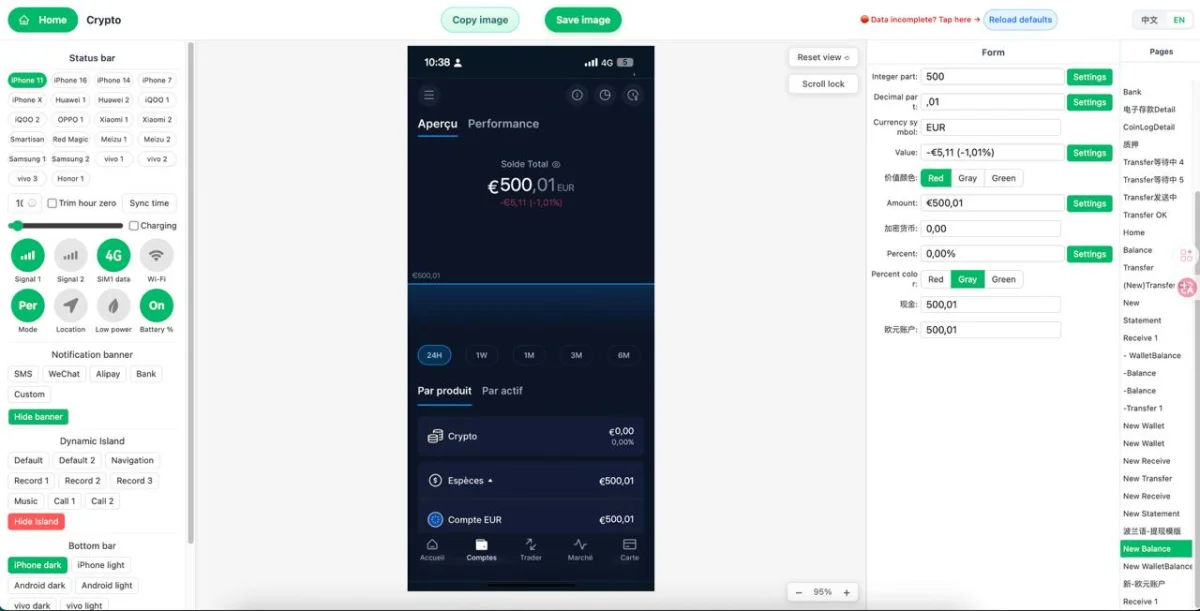
If the app header already uses a strong title area, make sure the status bar does not compete with it. The best-looking screenshot templates separate system details from app content in a natural way. That makes the final mockup more believable as a real product capture.
This is another reason Zoobic is useful for content work. The browser-based online editor gives you control over the small visual cues that make a screen feel complete, and those cues matter just as much as the main fields when you export the final PNG.
Build a Realistic Deposit Confirmation View
A crypto deposit page does not always need to show only the deposit form. In many cases, a confirmation or history-style view is even more useful. If your chosen screenshot template supports it, show the incoming transaction clearly so the screen tells a complete story.
A strong confirmation layout often includes:
- Asset type
- Amount received
- Timestamp
- Status indicator
- Secondary transaction detail
- Network label
- Address or record reference
The visual order should feel natural. Put the most important information first: asset, amount, and status. Then place supporting details below. This hierarchy helps the viewer understand the screen quickly and keeps the mockup from feeling overloaded.
Zoobic’s field-based workflow is well suited to this format because you can adjust the record text without changing the overall structure. If you need a clean deposit history image for a presentation, a confirmation-style screenshot template can be more effective than a full form view. The result stays focused, readable, and easy to reuse across different content formats.
Create a USDT Deposit Mockup Step by Step
USDT is one of the most common scenarios for a create crypto deposit mockup project because the interface is familiar and visually simple. A USDT version works well for product demos, tutorial images, and finance-themed content.
A practical workflow in Zoobic looks like this:
- Choose a deposit-related screenshot template
- Open the page in the online editor
- Set the asset name to USDT
- Update the network label
- Adjust the deposit amount
- Edit the timestamp
- Review the helper text
- Preview the screen
- Export PNG
Zoobic also makes it easy to prepare variations. You can create one USDT screenshot for a tutorial thumbnail, another for a blog illustration, and another for a product slide, all from the same screenshot template. That kind of repeatability is one of the biggest advantages of working in a browser-based editor.
Reuse the Same Workflow for BTC and ETH
Once your first deposit screen is ready, you can reuse the same method for other assets. That is a major advantage when you want to create a small set of related visuals. With Zoobic, you do not need to redesign the page. You only switch the asset-specific values in the online editor.
For BTC or ETH versions, change:
- Coin name
- Network label
- Deposit amount
- Transaction time
- Status wording if needed
Keep the surrounding layout the same so the visuals feel like part of one system. That consistency is useful for content series, comparison pages, tutorials, and product storytelling. A matched set of screenshot templates also makes your content look more intentional and professional.
If you are building multiple images, keep the same time format, same device style, and same overall interface tone. Small differences are fine, but too many changes can make the set feel disconnected. Zoobic’s field editing approach helps you stay consistent while still creating distinct crypto deposit mockup images for different assets.
Export the Final PNG with Confidence
Before exporting, review the whole screen one last time. Check spelling, alignment, spacing, and value consistency. Make sure the asset name, amount, network, and status all support the same story. A careful review saves time and helps the final mockup look polished.
Useful final checks include:
- Is the interface readable at a glance?
- Does the status bar match the device style?
- Are the labels consistent with the chosen asset?
- Does the screen feel like one complete layout?
- Is the file crisp enough for the intended use?
If the answer is yes, you are ready to export. A strong crypto deposit mockup should look clear in both small and large formats, and HD PNG export helps preserve that clarity. That makes the image easy to use across different content workflows.
Why Zoobic Works Well for Crypto Deposit Mockups
Zoobic is especially useful for this task because it keeps the workflow simple and focused on content creation. The platform is built as an online screenshot template editor, so you can search, edit, preview, and export without switching tools. That saves time and keeps the process accessible in the browser.
Its strengths are practical:
- 8000+ templates
- 300+ categories
- Searchable template library
- Form-based field editing
- Status bar controls
- Real-time preview
- HD PNG export
The platform also supports a responsible use case: entertainment and learning research only. That keeps the purpose clear and helps frame the mockup as a legitimate content asset rather than a real financial record. In practice, that is exactly how a well-made screenshot should be presented.
Final Workflow for a Clean Crypto Deposit Mockup
A reliable create crypto deposit mockup workflow in Zoobic follows a simple pattern: choose the right screenshot template, edit the fields in the online editor, review the status bar and transaction details, and finish with PNG export. When you keep the design focused and the content consistent, the result looks clean, readable, and ready for content use.
The most important habits are:
- Start with a scene that matches your use case
- Keep the deposit information realistic
- Use concise labels and balanced spacing
- Match the device frame to the interface style
- Export only after checking every visible field
That approach works well for USDT, BTC, ETH, and other deposit-style pages. It also makes it easy to build a small library of reusable mockup visuals for future articles, tutorials, and presentations. With Zoobic, the browser-based workflow is fast, practical, and easy to repeat.
Zoobic mockups are for entertainment and learning research only. Please use them responsibly.