What a MetaMask Wallet Screenshot Maker Should Do
For MetaMask-style mockups, the most useful scenes usually include a balance overview, a token list, a transaction history, a transfer confirmation, or an asset detail view. Each screenshot template supports a different editorial purpose.
A balance overview is the right choice when the article or slide needs a portfolio snapshot. A token list works well when you want to show asset organization. A transaction history layout helps when the focus is recent activity or a step-by-step workflow. A transfer confirmation screen is useful for product walkthroughs and interface references.
A practical selection process looks like this: 2. Pick the layout that matches the story your image needs to tell. 3. Check whether the screen shows the right combination of balance, tokens, and activity. 4. Open the template in the online editor and begin editing the visible fields.
If the content is about portfolio visibility, a clean balance screen is the best fit. If the content explains recent account behavior, a transaction history template will usually work better. The closer the screenshot template is to the final message, the less editing you need later, and the cleaner the result will be.
A useful editing pattern is:
- Adjust the token symbol and amount
- Update the fiat value so it aligns with the main balance
- Edit the date or timestamp if the template includes activity
- Refine the visible address or short identifier only where the template shows it
For content creation, that is a practical advantage. A clean mockup is usually better than a crowded one. Keep the visible information tight, readable, and coherent. The result will work more naturally in articles, slides, and tutorials.
Make the Screen Feel Native to the Device
Before export, review the device layer carefully:
- Match the time style to the phone layout
- Set battery and signal indicators to believable values
- Keep carrier text consistent with the device style
- Check the alignment around the top bar and screen edges
- Make sure the app content sits naturally inside the frame
Build a Clear Balance and Token View
A solid balance view usually includes the main amount, the token symbol, the fiat equivalent, a visible currency unit, and any small supporting label if the template shows one. The exact structure depends on the screenshot template, but the logic stays the same: one primary value, then secondary information beneath it.
A useful way to think about the balance area:
- Set the main token amount first.
- Match the fiat display to that amount.
- Add only the token rows the image actually needs.
- Review the spacing and visual weight in the preview.
- Export only when the hierarchy is easy to scan.
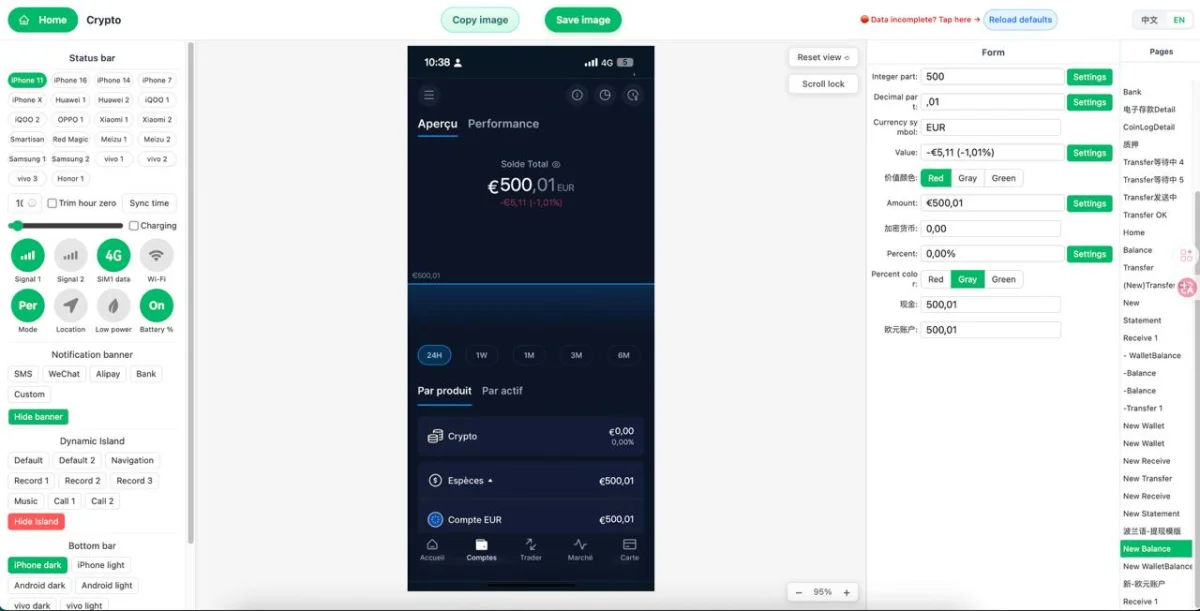
Zoobic’s online editor helps here because every change is visible immediately. You can refine the number formatting, compare balance states, and settle on a version that feels stable. When the screen is clear, the mockup looks more professional and more useful.
Edit Transaction and Activity Sections Precisely
Common fields in an activity section include date, amount, status label, counterparty name, short identifier, and direction such as sent or received. You do not need a long list of rows to make the screen believable. A few well-edited entries usually work better than a cluttered history.
The goal is readability. Each row should be easy to understand at a glance, and the values should support the same overall story as the balance area. If the template shows completed, pending, or received states, keep those labels consistent with the surrounding details.
Common activity patterns include:
- A single completed transfer
- A recent received entry
- One pending status row
- A short history list with clear timestamps
That kind of structure helps the screenshot template feel credible without becoming busy. It also makes the image easier to place into an article or presentation because the viewer can understand the layout quickly.
Keep Metadata Consistent Across the Mockup
Zoobic makes it easier to stay consistent because the editable fields live in one form panel. As you update the screenshot template, you can check the visible network, the main balance, the token labels, and any identifier fields together. That keeps the workflow organized and reduces the chance of mismatched details.
A simple consistency pass should cover:
- The network label and the token context- The balance amount and fiat equivalent
- The date or time fields in the activity section
- The visible labels used in the screenshot template
Zoobic’s screenshot template library helps here too, because each scene already has a logic built into it. Once you choose the right layout, the online editor lets you align the values with that layout instead of inventing structure on the fly. That is one reason template-based mockup creation is faster and more reliable than rebuilding the screen manually.
Refine Spacing and Prepare the PNG Export
Focus on the areas that tend to break first:
- Header spacing
- Token row alignment
- Activity row density
- Top bar balance with the phone frame
- Any clipped labels or truncated values
Good use cases include:
- Product walkthrough images- UI reference screens for design discussions
- Presentation assets for internal demos Please remember the compliance note: only for entertainment and learning research, not for unlawful use. Used responsibly, this workflow is a straightforward way to produce clean wallet mockups that fit modern SEO content and product communication.